Translate

Showing posts with label Unit 33 Stop-motion. Show all posts

Wednesday, 8 October 2014

Unit 33 Assignment 3 Production and evaluation


Self Evaluation


What did you set out to make?
I set out to make a Claymation stop motion animation about something unusual which would shock people and make people laugh by the weirdness of the narrative and characters mixing reality with surrealism. 

What goal did you want to achieve? (Make something funny/arty/interesting/unusual)?

My goal was to make the animation a bit surreal and comedic. 

Do you think you have achieved your goal?

I think my goal was achieved because the narrative is quite original and it is something you wouldn't expect to see in your everyday kitchen setting which makes it surreal and it also makes it funny because of the unusual/surreal elements of it. 

What are the best bits from your stop motion in your opinion? (Characters/set design/storyline/sound/props? Give some screen shot examples


In my opinion some of the best bits of my stopmotion were when I made it look like the camera was zooming into the characters, I did this by slowly moving the characters closer to where the camera was standing still. 


I like my narrative because I think that it's unusual and funny which is just one of the types I like to watch. I think that my narrative is creative and is different to ones i've watched in the past. 


The use of sound in my animation is quite good as it is recognisable making the animation funnier and it relates to the narrative well. I especially like when I used The Imperial March. 

What are the weakest bits of your stop motion? Why do you think they are the weakest?

There is a bit in my animation where I try to do a gradual panning shot which I think is the weakest part of my animation this is because the movement looks a bit jumpy which is due to the fact that I didn't take enough shots to make it run a bit smoother.

Who was your target audience?

My target audience was adults and teenagers.

Do you think you have successfully targeted them? (link to some screenshots that you think are the best at targeting your audience)
I think that part of my target audience was successful as it would appeal to teenagers due to the light colours and the narrative of my animation however my characters are quite simple so it may not have been successful at targeting an adult audience. I also think that the simplicity of my characters and the setting would have helped target my audience successfully as it is a mixture of claymation and real live action basing it in a real life setting which makes it more realistic and relatable in a way.
I think that the use of well known soundtracks helped to target my audience as it appealed to their personalities and what they might like. 


What different types of sound did you use?
I used some different sound elements, varying between soundtrack and sound effects. I have used 4 different recognisable soundtracks and several sound effects to create cinematic impacts and to match the action happening on screen. I used both diagetic and non-diagetic sound to enhance my animation.

What bits of sound do you think are the most successful?

The bits of sound that I think are the most successful are when I use the Star Wars Imperial March and the Jaws Theme, I think that I fade them in at good moments making it relevant and ironic to the on-screen action. I like the sound effects that I chose to put in my animation I think they are well suited making my animation funny and attracting my target audience.


Peer Analysis

After getting in a group of my fellow students we managed to analyse our animations to gain good feedback for things that went well and things that need improvement. From this I learnt the following:
  • That my peers found that my narrative was interesting and funny and it was so gory that it became funny which made it good for my teenagers who were my target audience. 
  • That they liked the movement of my peers labelling it 'sinister' and that they thought that the facial expressions of my characters were good, especially my screaming orange. They thought that my colours were good and realistic.
  • They liked a lot of my sound effects but mentioned that my soundtrack at the start was a bit quiet so in improvement I could change the volume to make it loud enough. 
  • They also advised that to improve my animation I could speed up some of the frames at the start and to speed up the movements where the peas roll. 
  • Another thing they liked about my animation was my set that it was unexpected and that the props -the weapons were good. 
  • They also mentioned that some of my camera movements were slightly jerky so to fix this I could erase some of the frames or speed them up so it would make it less noticeable.


Questions to ask people on the open day


  • What did you think about the storyline?

  • What did you think about the character design?

  • What did you think about the colours/drawing?

  • What did you think about the set?

  • What do you think could have been better?
  • My target audience was teenagers do you think it targets them?
                                                                                                                                                                

After completing my stop motion animation I proceeded to screen it to parents and future students who came to the open day to look around. During the open day I gathered lots of feedback from various sources by asking them the questions above which helped me to get some helpful feedback. From the sources I drew some conclusions from my data. 

'I don't think I've ever seen anything like it' 

'suitably horrific' 

'liked unsuspecting orange' 

'more agressive'

'understandable'

'imaginative and unexpected'


The common answers about the narrative (storyline) were that it was funny and horrific which I was pleased with as it was my original aim of the stop motion. I found that a lot of people said that it was great and that they really enjoyed the creativity of my idea. 

The common answers about the character design were that they were very likable, a lot of people commented that they liked the character of the unsuspecting orange and that the peas looked very intimidating and scary. I was also told that people liked the transition of the peas' facial expressions from happy and sweet to evil and intimidating. 

The commons answers about my set were that it was very fitting and that people liked the fact that it just seemed ordinary. 

The common answers about improvements that I could make were a bit mixed. A lot of people said that they didn't know or that they felt that there was nothing to improve on however I did get some comments on an improvement to make the peas look more aggressive. 

The common answers about the target audience were that the stop motion fit my target audience of teenagers, with this I also got a comment as they thought that it would also be suitable for a slightly younger demographic.

Looking at the most common answers I would have to say that I do agree with the common answers. I was quite unsure of whether it would be well received with my target audience and whether people would be interested in the narrative so I was pleasantly surprised when so many people enjoyed it and found it fitting to my target audience. I agreed with the likability of the characters and I think that I portrayed the different characters quite well. I do disagree with them saying that I had nothing to improve on as I feel like I still could have sped up some of the shots and if I would have had more time I may have gone back to re-film some of it again. In conclusion I agree with the majority of the comments. 

Overall in my opinion I found that the open day was a really good way to screen my stop motion as it helped me ask people who were specifically interested in media or film their opinions. I felt more comfortable in this kind of environment as it was a bit more relaxed and I got to explain why I made the stop motion and a bit about what I enjoyed, it helped me feel connected to my audience. 


Looking at my stopmotion in comparison with others of a similar style I found that mine compares in a few ways. From looking on youtube I found a stopmotion with a similar context about some oranges that explore the kitchen. 

In this animation the oranges gradually move across the screen similarly to the way I moved my peas across frames. In comparison to this animation mine seems a bit shakier and it doesn't look as smooth. However I think the transition between the facial expressions in my animation are just as good as the ones in this one as mine are separated by transitions and the music builds up which I think is better in my animation but the faces change smoothly in this animation. The narrative is similar in both animations, there is a bad outcome in both resulting in a dead orange. Another way it is similar is that the narrative involves a group of fruit/vegetables exploring their surroundings. 


Wednesday, 17 September 2014

Unit 33 Assignment 2

INITIAL IDEA -CLAYMATION
Evil killer peas. -start off nice like the gremlins so nice and cute, they sneak out of a cupboard and set off to kill other pieces of food around the room.
Claymation peas with a live action set. 
Narrative.

                                                                                                                                                                   
Treatment

Plot:
My idea is going to be based inside a kitchen, the main objects being a group of peas. The peas will come out of a packet of peas to explore the room, they will then become monsters trying to destroy other pieces of food. 

The start of the animation begins as we will see the cupboard door opening slightly, the camera will then zoom in as we see a tin/packet of peas. We see something trying to get out, suddenly we see a group of peas jumping out of the tin/packet. The peas will jump onto the kitchen side and begin their travels. The peas will move almost like soldiers charging happily. The music will be light and happy to begin with but it will subtly change into one that sounds like danger or evil doing. All the peas will stop their faces turning from happy and nice to gradually angry and smirking. The camera will then move to focus on another piece of food walking around singing cheerfully -something such as: a piece of sweetcorn, bananas or a carrot. The peas move slowly in the shadows and they then attack the other food, eating it. We would then hear footsteps and the peas scramble back into the cupboard, we see a person looking around, then when their back is turned the cupboard open slightly and we see one evil pea looking out, the camera zooms slowly to look at the peas and the cupboard then slams shut.
                                                                                                                                                                

Target Audience and Genre: 
My target audience will be teenagers and adults. The age will range from about 13 upwards. My animation will mainly be shown on youtube so using this I gathered more information about youtubers and the most popular stop-motion animations on youtube. I found that some of the most watched stop-motion videos on youtube are by PES. They make stopmotion animations using objects and real life action, I also found out that the common age of a youtube user is from 18-29 which is perfect my target audience of older teenagers and adults. Teenagers respond to humour better than anything else The PES videos use bright colours and the content is a bit surreal and funny which is what appeals to the teenage audience the most. https://www.youtube.com/watch?v=qBjLW5_dGAM 

I took inspiration from Lee Hardcastle's Claycat's, that it was claymation which is generally aimed at children but he took a different spin on it and made the theme and the narrative darker and he made it comedic. I plan to make my animation look sweet and innocent something that you would think about a younger audience, then it will slowly change into a darker more sadistic narrative which will have a shocking impact on my audience and it will hopefully make them laugh and keep them interested. For this my genre will be a surreal comedy. I will vary my camera shots from static to tracking, so that my audience can follow all of the action on screen and they will be able to feel more involved in the narrative and imagine that they are there. I would say that it would appeal to a more male based audience as it a cartoon which studies show is something a male target audience would enjoy more. 
                                                                                                                                                                
Design:
The colours I will use will be a mixture of natural colours and a few more brightly coloured aspects. This will engage a young audience but it will also have some realistic elements to the animation. The sounds I will use will link to what is happening on screen for example when they are exploring there will be an adventure soundtrack. The actions to make it seem more realistic will be to have the peas rolling around as this is what peas would usually do however I may also have them shuffling which would make the animation funnier. For my animation I will follow some of the principles of animation such as anticipation and secondary action. I will follow some of the principles of arcs by allowing the characters to move in curves or arcs but I may also break the principles by making the peas shuffle and jump. 
                                                                                                                                                              
Something similar:
Something similar to my animation idea is an animation called A Juicy Escape which is where an orange comes to life and escapes from a kitchen. I will be using the same idea of using a kitchen allowing the scene to focus on an object and the genre is also a bit surreal and comedic. Like in A Juicy Escape we will see the animated peas rolling around with varying facial expressions, it will be lighthearted to begin with and then the narrative will become darker making it break the generic conventions of an animation.
                                                                                                                                                                

Storyboard
                                                                                                            
Soundtrack

Soundtrack: The Imperial March (Star Wars)

Sound effects: Cinematic Dark Transition


Sound effects: Man Screaming 2

Soundtrack: Jaws 1975 -Main Title (Theme From Jaws)

Soundtrack: Tchaikovsky -Dance Of The Sugarplum Fairy

Soundtrack: Bernard Herrmann -Psycho (theme)

Wednesday, 10 September 2014

Unit 33 Assignment 1 Research Handouts

https://docs.google.com/document/d/15r2oBLBS1BhQlJhRRoG9BrpY7DUy4NAiuxTsgrxedXI/edit?usp=sharing -Ray Harryhausen Handout

Unit 33 Assignment 1 Homework Task -Kinetoscope

The finished 'Kinetoscope' could, if Edison’s original vision had prevailed, turned out quite different.
Employing W.K.L Dickson in the Spring of 1883, Edison soon noted his enthusiasm and value and made him his assistant. Five years later in 1888, inspired by his Photograph, Edison set Dickson to work on developing, “...an instrument which does for the Eye what the Phonograph has done for the Ear, which is the recording and reproduction of things in motion....”
Early experiments were tried using ideas developed from the phonograph - a cylinder based device onto which a series of microphotographs would be arranged in a spiral formation - like the recorded tracks in the tinfoil of a phonograph.
Edison envisaged projection to be achieved by shining a light source through the microphotographs from inside the cylinder.
The kinetoscope was invented in the laboratory of Thomas Edison.                        

A kinetoscope is a device which allows people to view motion pictures. The kinetoscope was one of the first such devices widely developed and distributed, and while the design ultimately proved to be a failure, it clearly inspired other inventors, so it could be considered a landmark invention in the history of film. This device was invented in the laboratory of Thomas Edison, and as was conventional for inventions in his lab, the patent was taken out by Edison himself, making it challenging to determine precisely who worked on the project.

The design for the kinetoscope consisted of a closed cabinet in which the film was spooled. To operate the device, the user opened the top and peered through a small hole, and as the film was moved across a series of rollers, a backlight would illuminate it, creating the illusion of a moving picture, as long as the film was rotated at the proper speed. When the kinetoscope was first shown to the public in 1894, it proved to be a big hit.

A version of the kinetoscope accompanied with sound was also developed, and christened the kinetophone. Linking sound with pictures turned out to be quite a challenge, as it was extremely difficult to synchronise the sound and the picture. For viewers, the kinetophone was also not terribly comfortable or convenient to use, as it required wearing headphones while leaning over the cabinet to view the movie as it was displayed.

http://www.wisegeek.com/what-is-a-kinetoscope.htm


Friday, 5 September 2014

Unit 33 Stop Motion Unit 1 Lesson Notes

What genre is the animation and what generic conventions (things you expect to see) can you pull out?
What do you notice about the movement of the figures body?
What do you notice about the movement of the figures face and facial expression?
What comments can you make about the use of sound?


CLAYCAT'S THE RAID -Claymation in style


  • Genre is ACTION. We know this because of the generic conventions: the animation features lots of loud sound effects, diagetic and non-diagetic sounds. The animations contains guns, explosions and violence which are all generic conventions of the action genre. 
  • The movements: when the characters walked in the scenes it was unnatural because the characters shuffled rather than walk naturally. They shuffled due to having no legs however we aren't disrupted by this in actual fact it makes the animation funny to watch. This breaks the principals of animation by differing from the principle of arcs (. 
  • When the character was shot they flew backwards, the same for when the character fell out of the window which makes the animation more realistic because they were using the principle of gravity. This is also a factor when tears/sweat falls which shows emotion -fear which helps the audience understand danger. 
  • The dialogue of the scream. explosive sound effects and the bounce of the string were really good aspects of sound which help to support the narrative, it makes the meaning deeper and gives the stopmotion a rich palette of sound. 

What different styles of Stopmotion have we seen?
  • Cartoon
  • Claymation
  • 2D Drawing 
What two principles of animation have we learnt about?
We have learnt about the principle of gravity (makes animation more realistic) and the principle of arcs (which is movement)

When it was hard to identify a genre, what word did we use?
Surrealism 

What is the FINAL deadline for assignment 1?
19th September.

How long does your section of Stopmotion have to be?
30 Seconds long


Differences between videos on Steph's blog:

What differences can you see in the two animations?
  • The King Kong animation was in Black and White (due to the fact that the animation is years old.)
  • The character movements in the King Kong animation were very jerky and the principle of arcs wasn't used well, the gaps inbetween shots make the the animation look jumpy.
  • The sound was clearer in the Creature Comforts animation. -sound isn't in sync to the movement of the animals. 
  • The content in Creature Comforts was funny because of the dialogue and the genre of the animation. 
What similarities are there in the two animations?
  • Both animations are in the style of Claymation. 
  • Both animations are meant to be set in realistic settings.  
  • Main characters (protagonists) are animals in both animations. 
  • Both animations have a character/characters who are human. 
  • Both animations use the principles of gravity.
  • Both animations have the same point of view. -limits it, can't see the whole scene, could impact audience engagement.
  • Give animals human tendencies -animals sitting on couch, King Kong defends woman.
Can you tell if over time there has been a development in the skills and techniques of animation?
  • yes, you can see this from:
  • The colours have increased, in King Kong the animation is in black and white but in Creature Comforts the colours vary a lot due to better more improved technology. 
  • The character movement has improved, in the King Kong animation you can see the shaky movements of the characters: see it at 0:46 especially where as in Creature Comforts the character movement is precise.  
  • Set designs are more detailed, they're crisper, sharper and clearer than the background of king kong. 
  • The narratives have become more creative and it has shown that stopmotion has developed and has broke out of the generic conventions. 

Time codes of Principles of Animation examples:


  • At 0:03 we see an example of secondary action of the butterfly fluttering near Flynn's face.
  • At 0:16/0:17 you see the anticipation when the lizard jumps up and looks into the off screen space. 
  • At 0:19 we see the principle of gravity as Flynn is being dragged across the ground, we also see secondary action again as he scrapes his arms along the grass in 0:21. 


Thursday, 4 September 2014

Unit 33 Genre Activity Presentation

Harry did another presentation exactly the same but with a different genre to focus on.

Monday, 23 June 2014

UNIT 33 ASSIGNMENT 1 -The Development Of Stop Motion Animation

During this unit we have learnt about the different types of Stop-motion Animation such as: Claymation, Live Action and 2D Drawing. We have also learnt about the different genres that an animation can fit into. The final thing that we have learnt is to spot the Principles Of Animation. There are 7 principles of animation, they are as follows: Gravity, Arcs (so movement), Time, Anticipation, Secondary Action, Persistence Of Vision and Overlapping and Follow Through.
                                                                                                                                                                   
From watching 'Claycat's The Raid' we saw examples of the first principle: GRAVITY. In simple terms the principle of gravity is what makes the animation more realistic. In this screenshot you can see that when the character was shot they fell backwards and out of the window which makes the animation more realistic.


The second principle is the principle of ARCS. The principle of arcs are the movements that a character makes, making the animation and the character more believable. For example in 'The Raid' the cats break the principals of animation as their walking was unnatural -they shuffled which had a humorous effect on the audience.

Another principal of animation is the principle of TIME. This means the time it takes to make the action happen or the number of frames needed to move an object. The less frames there are the faster the time and vice versa the more frames there are the longer the animation is. To accelerate the animation you would increase the distance between the movements quickly where as for deceleration you would decrease the movements gradually. A key thing to remember is that the right timing is the difference between looking from side to side.

ANTICIPATION is the idea that the head must turn to look into the off screen space so that we can anticipate someone coming into the frame. It basically means something that a character does which helps the audience to anticipate what will happen next.

SECONDARY ACTION is where you add secondary actions to emphasize the main action, it give a scene more life making it more realistic. For example if a person is talking in the street and there are other people walking around or a truck picking up bins in the background or if someone is walking and they swing their arms it helps to emphasize the main action by making it realistic rather than taking focus away from any action going on in the foreground.

The PERSISTENCE OF VISION is a theory that a strip of still images in any order can look animated if viewed by the human eye at a certain rate -for example a flipbook.

Finally there is OVERLAPPING AND FOLLOW THROUGH. Follow through means that the body part will continue moving after another part has stopped. Like when you flex your muscle and move your arm down, your elbow will stop moving but your arm will continue moving. Overlapping is the tendency that body parts will move at different rates -your leg will move on different timings than your head etc.


Timeline

Phenakistoscope -developed in 1832

Zoetrope -developed in 1833/1834

Praxinoscope -developed in 1877

Willis O'Brien born in 1886

Kinetoscope -developed in 1889

Ray Harryhausen born in 1920


THE TALE OF THE FOX -Stopmotion film (Puppets)

Produced by: Louis Nalpas and Roger Ribeche (written by Johann Wolfgang Goethe) -1930
Target Audience: I'm not quite sure but I would say historians and people who enjoy old films because it is of an old style and it is a stand-out film compared to the stop-motion we see today. Also children may be interested in this because it features animal puppets which may make children laugh. 

Jan Svankmajor born in 1934


Lee Hardcastle born in 1985


PINGU -Stop-motion for Children (Claymation) 

Produced/created by: Otmar Gutmann and Silvio Mazzlo. -1986

Target Audience:  Children. It is suitable for children because it features brightly coloured settings and characters, it has a funny and simple narrative which would attract a younger target audience.


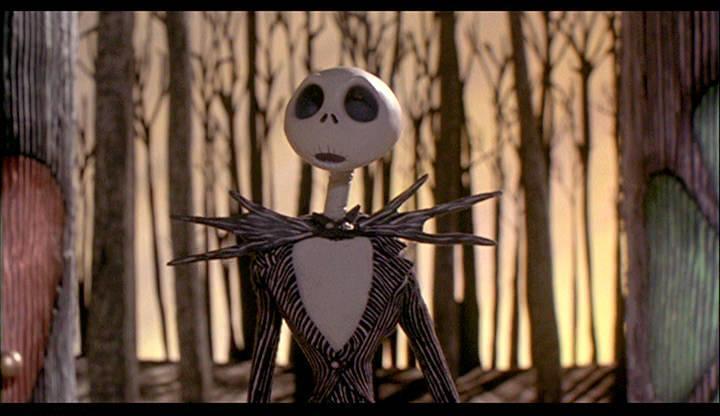
THE NIGHTMARE BEFORE CHRISTMAS -Stopmotion Feature Film (Claymation)

Produced by: Tim Burton and Denise Di Nova. -1993
Target Audience: Teenagers -boys probably because it is about skeletons and it is dark and about Halloween which would attract boys as it is a common interest. It is unusual and funny (surreal) which would attract a younger audience.


STRAWBERRY SWING-Stopmotion Music Video (Real People/Live Action) 

Produced by: Markus DravsBrian EnoJon HopkinsRik Simpson -2009
Target Audience: Coldplay/music fans, adults, teenagers. 


POST -IT NOTE ARCADE -Stopmotion (Objects)

Produced by/created by: Michael Birken -2013 (youtube) 
Target Audience: Students and adults would be the target audience because it is surreal and bright which would attract a younger audience but the complexity that went into making it would be appreciated by an older audience as well. Another target audience would be gamers due to the video game themes throughout the video. 


AN UNLIKELY RIDE: BINARY BIKE -Stopmotion (Real people/Live Action)

Produced/created by: Bringham Rupp and Jarel Morrow. -2013
Target Audience: Young people (boys most likely) would be the target audience because the stop motion is about bikes and it features a boy on a bike. It is quite random and would seem like an adventure which is something that stereotypically a boy would like. People who like bikes or sport would also be a good target audience.


The Nightmare Before Christmas


For this animation I would say that the Genre is Fantasy. I say this because it is set in a place which is magical and unusual, the characters aren't natural they are mystical and creepy which are generic conventions of a Fantasy film. The target audience for this I would say are teenage boys because the narrative is dark and full of creepy settings and unusual characters which would appeal more to a male audience,  I say teenagers because I feel that children would find the animation scary perhaps and it would appeal to a slightly older audience. In this clip we see examples of some of the different principles of animation. At 0:12 you see a good example of the principle of follow through as we see Sally moving her arm down this makes the scene more realistic to the audience. Another principle we see during this video is the principle of Arcs -at 1:00 we see Jack The Skeleton walking around, the way he walks is natural which follows the principles of arcs making the animation more realistic and showing the movements as more precise allowing it to flow more. At 0:35 we see an example of secondary action when a creature walks in the foreground -even though he is in front we were focusing on Sally who is sat down. Doing this helps to make it funny which breaks the generic conventions of the animation and widens the target audience. If they hadn't used this principle the animation may not have had a good effect on the audience, it wouldn't have made them laugh or recognise the humour. 
                                                                                                                                                                   

Post-it Note Arcade 

Unlike the previous animation this stop motion is not made out of clay so we will see differences in the way it is made and in the principles it follows. I would say that this animation is in the surreal genre because it is very brightly coloured and it isn't something that you would see in your everyday life which makes it unrealistic and slightly weird or random. The target audience for this would have to be adults and gamers as it has a video game theme throughout which would attract people that play video games and adults would be able to appreciate the skills it took to make this kind of stop motion and they would be able to recognise the famous characters shown in this animation. In this clip we see the principle of time being used. The acceleration has been increased to make it look as though the picture is animated. We see this specifically from 0:12-0:20 this allows us to follow the action which keeps the audience interested and amazed if they weren't to accelerate the timings then the animation wouldn't have the same effect on their audience as it wouldn't be fast paced which often video games are and the narrative would be lacking as it would just drag on too long and people would lose interest. At 0:58 we see an example of arcs when the mouth of the pac-man character moves like it would in the video game using this principle of arcs helps the audience to relate and recognise the character which would intrigue the audience and have a good effect on the audience drawing them in -if the animation weren't to follow the principles of arcs then the animation would lose its appeal and it wouldn't be believable to the audience.
                                                                                                                                                                  

Pingu


This animation is another claymation animation however this time its target audience is children, I know this because of the bright colours and the funny theme of the show. In the clip we see various principles of animation being used. For example at 1:45 we see an example of secondary action when pingu walks he swings his flippers which adds more realism to the action and by using it, it has a funny effect on the audience making them laugh.

At 1:55 we see the animation break the principles of arcs when pingu slides and shuffles along the floor which makes the animation funny and gains the audiences's attention and interest if the animation were to follow the principles of arcs it would make the animation seem more natural but it may have lost the entertainment factor on the audience and possibly lost some of the humour however I don't think that it would have made a huge impact on the audience if it weren't there. 


Old VS New

Over the years we have seen stop-motion animation go from strength to strength, changing the face of animation. The oldest video from my blog is The Tale of The Fox using puppets from the 1930's which I will compare with one of the newest videos from my blog The Unlikely Bike Ride. From looking at both videos I can see that both styles differ, the bike ride animation is using live action whereas the fox animation is using objects. In the Tale of The Fox we can see that the change between certain shots looks jumpy and it doesn't always look like a fluid movement of poses, this shows that there aren't enough shots per second which makes it look rushed. It does follow the principles of arcs making it realistic but I think that the main issue with this animation is the age of it so the models do look really old, as it is in black and white the lighting isn't brilliant and it just makes the animation look dated.  As it is that old the skills used for this animation aren't as good as animations made nowadays.The sound in the animation is good having various sound effects. 

In the Unlikely Bike Ride we see that the skills have adapted through time, the movements aren't jumpy giving it a good timeframe allowing the audience to follow it fully. The animation is using live action which allows the animation to naturally follow the principles of arcs however it defies the principles of animation at 0:25 when the boy jumps off of the edge realistically he would fall not fly onto a bike which makes the animation a bit surreal and different to what you would normally see. Comparing this to the Tale Of The Fox we can see that the narrative in this animation is more creative which shows that stopmotion has developed and broken away from the generic conventions. The setting and set designs are clearer and more detailed in this animation making it look sharper. 
                                                                                                                                                                   
Genre, Style and Audience

Genre and style go hand in hand to bring in specific audiences, often animations bring in more than one specific audience. From analysing the animations I gathered and from the work that we prepared in class notes I feel that Claymation is better for children as it uses bright colours and animated characters - for example the children's show Postman Pat. These bring a funny aspect to the animation, giving animals human like aspects such as being able to talk or walk on 2 legs like in Wallace and Gromitt. However other animations have been made using clay which aren't aimed at children such as Lee Hardcastle's Claycat's EVIL DEED II which is funny as the principles of animation break, in this screenshot we can see the cat standing up which is unrealistic and it is screaming which makes it funny and shocks the audience which shows that audiences and styles are changing. 

Apart from claymation we can see that there are genres more suited for different styles. I think that for the fantasy genre often it is a mixture between claymation and live action.